
Perplexity AI: a polished search wrapper, not a reinvention.
Perplexity is useful, well-packaged, and commercially clever. But usefulness is not the same as invention. Its rise says more about AI market timing, interface design, and distribution strategy than a breakthrough in underlying intelligence.

The headlines made Perplexity feel unavoidable.
Perplexity AI became one of the loudest names in the AI search space because it arrived with a simple promise: ask a question, get an answer, see citations, skip the clutter of traditional search.
That is a strong product pitch. It is also why the company’s valuation, investor attention, browser ambitions, and reported offer to buy Google Chrome generated so much attention.
The problem is not that Perplexity is useless. The problem is the narrative that Perplexity represents a fundamental reinvention of search or AI.
A closer look at the “innovation” claim
Perplexity is convenient, but convenience is not invention.
Perplexity combines web search, retrieval, summarization, language-model generation, and citations into a clean answer engine. That workflow is useful. It saves users time. It can feel dramatically better than opening ten tabs and piecing together the answer manually.
But those ingredients already existed: search indexes, snippets, citation links, chat interfaces, retrieval-augmented generation, and large language models. Perplexity’s strength is in packaging, not necessarily in inventing the core technology.
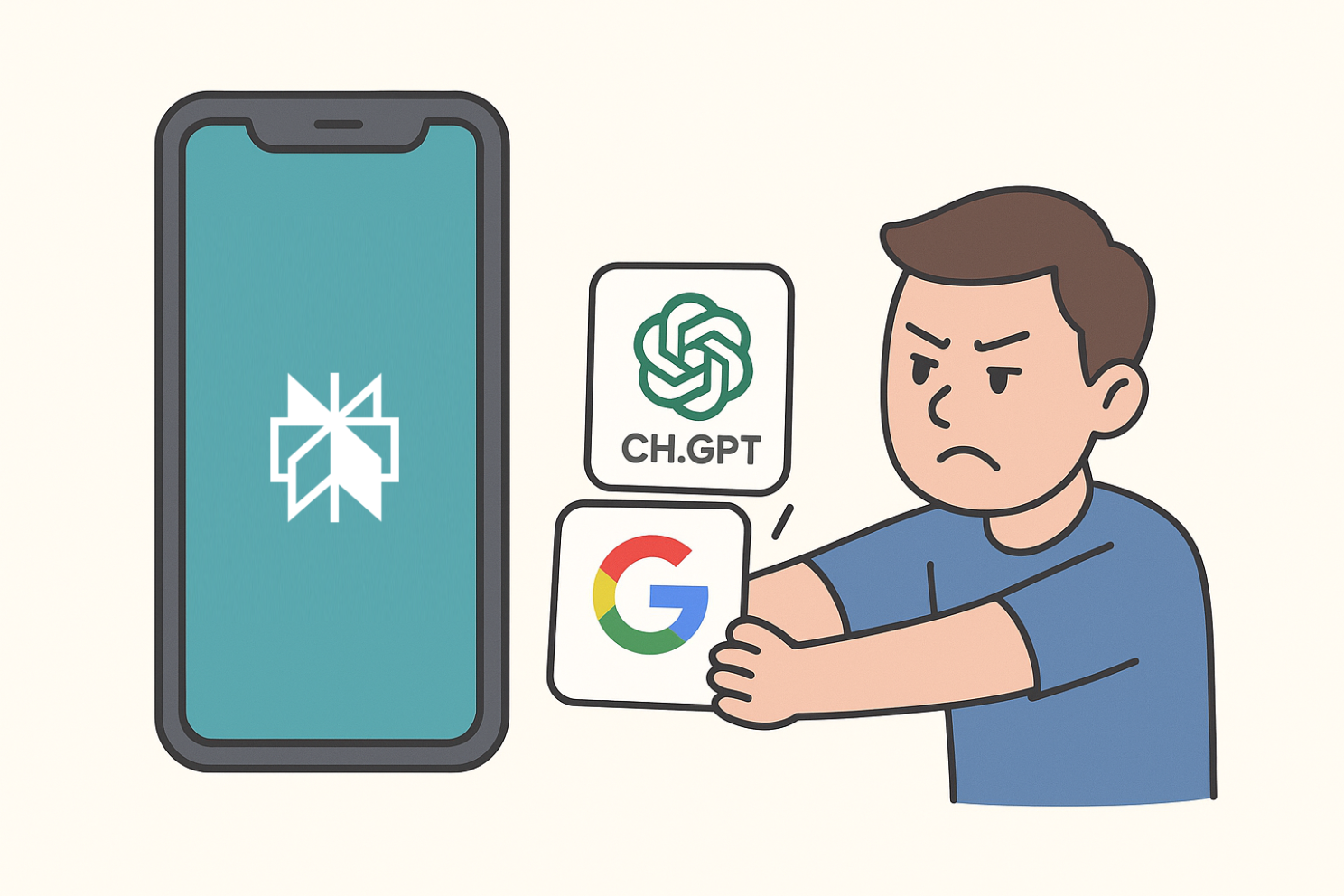
The AI stack is integrated, not fully owned.
Perplexity offers access to several leading AI models and has also developed its own model variants. But much of the perceived “intelligence” users experience comes from the broader AI ecosystem: large models, web retrieval, citation extraction, search infrastructure, and summarization pipelines.
That does not make the product worthless. Integration is valuable. Many successful companies win by combining existing technologies better than everyone else. But we should be precise about what kind of innovation we are talking about.
The publisher conflict exposes a weakness.
Perplexity’s value depends heavily on access to fresh, high-quality information from the open web. That makes its relationship with publishers critical.
News Corp’s Dow Jones and the New York Post sued Perplexity in 2024 over alleged misuse of their articles, and the case continued into 2025. CNN filed a separate lawsuit in 2026 alleging unlawful copying and distribution of CNN content. Whether Perplexity ultimately wins or loses these fights, the legal pressure shows the tension at the center of AI answer engines: if the product summarizes the web, who gets compensated for creating the web?
A polished wrapper can still be a strong business.
Calling Perplexity a wrapper is not an insult by itself. Some of the most successful products in technology are wrappers, aggregators, interfaces, or distribution layers around deeper systems.
The issue is valuation versus defensibility. If the product advantage is mainly interface, speed, citation layout, and model routing, competitors with deeper infrastructure can copy much of the experience.
- Google can integrate AI answers directly into search and Chrome.
- OpenAI can combine ChatGPT, web browsing, memory, apps, and enterprise workflows.
- Microsoft can tie AI search into Bing, Edge, Windows, Office, and enterprise accounts.
- Anthropic, xAI, and others can connect strong models to retrieval and research interfaces.
The more the major platforms add similar research workflows, the more Perplexity has to prove that its product experience, trust, brand, speed, and distribution are enough to remain distinct.
So why the hype and valuation?
Perplexity’s rise makes sense when you separate usefulness from breakthrough invention.
- Convenience: users want direct answers with sources.
- Timing: investors are still hunting for the next AI platform layer.
- Narrative: “AI search” sounds like a direct challenge to Google.
- Publicity: the Chrome bid generated enormous attention, even if the deal was unlikely.
- Distribution: browsers, phones, apps, and partnerships can make a product feel bigger than its core technology.
That is a smart business strategy. It just is not the same thing as proving that the company has reinvented search.
The product lesson: packaging matters, but so does truth.
Perplexity proves something important for builders: the best technology does not always win. The clearest workflow often wins. The easiest product to explain often wins. The best-timed narrative often wins.
But builders, investors, and users should still ask the hard question: is the product creating a defensible new layer, or is it temporarily ahead because it packaged existing capabilities better than larger companies did?
My opinion: Perplexity is successful, polished, and useful. It is also less of a search revolution and more of a well-executed interface over the current AI ecosystem.
Useful context for the claims above
Useful products do not need fake invention stories.
A product can be valuable because it is clearer, faster, easier, or better packaged. That is real value. But it should be described honestly.